Table of Contents
ToggleD.Va isn’t just another tank in Overwatch 2, she’s one of the most mechanically demanding and rewarding heroes in the entire roster. Whether you’re grinding competitive or just trying to climb out of lower ranks, understanding how to pilot her mech effectively can be the difference between a lost fight and a clutch victory. Her kit is deceptively simple on the surface: a cannon that fires at close range, a protective matrix, boosters for mobility, and a self-destruct that can swing entire team fights. But mastering D.Va means understanding the nuances of positioning, ability timing, and mech management that separate the one-tricks from the average players. This guide covers everything you need to know to make D.Va one of your most dangerous heroes on any map.
Key Takeaways
- D.Va is one of Overwatch 2’s most mechanically demanding off-tanks, requiring mastery of positioning, ability timing, and close-range engagements to dominate team fights.
- The Fusion Cannon deals maximum damage at close range; effective ammo management means closing the gap with boosters and unleashing full magazines rather than spamming from medium distance.
- Defense Matrix is D.Va’s most versatile tool and blocks all projectiles except hitscan bullets; timing it preemptively to deny enemy ultimates separates skilled players from casual ones.
- Self-Destruct is most effective when coordinated with team setups like Zarya’s Graviton Surge or Zenyatta’s Discord Orb, not when used to chase solo kills.
- Baby D.Va’s pistol state is a legitimate damage-dealing form that skilled players leverage to finish low-health targets and maintain threat during mech respawn windows.
- Team composition and communication are critical—pair D.Va with mobile supports and main tanks to create layered defense, and call out dives so your team can follow up for maximum impact.
Who Is D.Va and Why She Matters in Overwatch 2
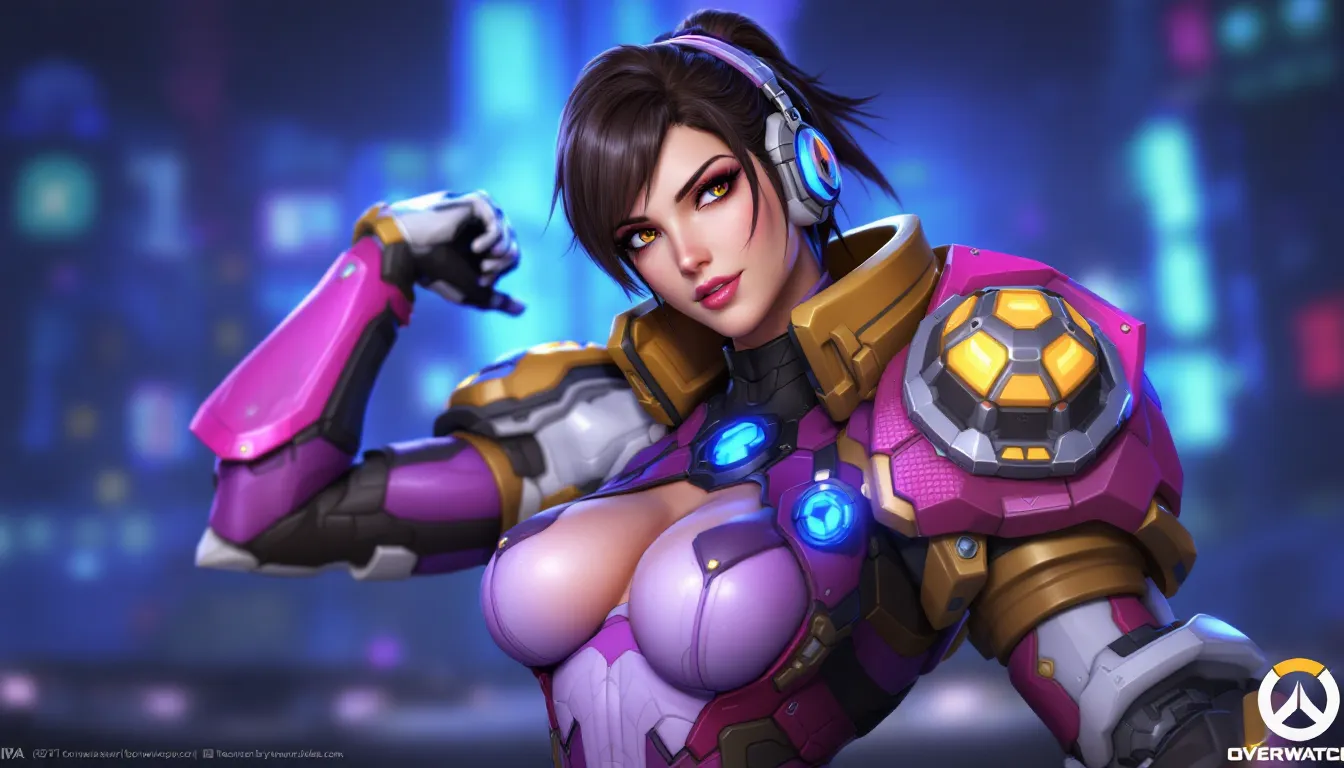
Hana Song, known in-game as D.Va, is a South Korean gamer-turned-mech-pilot who fills a unique role in Overwatch 2’s tank lineup. Unlike traditional main tanks like Reinhardt or Sigma, D.Va functions as an off-tank with exceptional mobility and close-range damage output. She was originally an esports pro before joining Overwatch’s Strike Team, which means her character design emphasizes aggression, quick decision-making, and mechanical skill.
When Overwatch transitioned to Overwatch 2, D.Va received significant gameplay adjustments. Her clip size increased, her Defense Matrix cooldown was reduced, and her overall role shifted from a defensive utility tank to a more aggressive, playmaking hero. These changes made her invaluable in modern meta compositions where teams need a hero who can contest space, hunt isolated targets, and burn through barriers quickly.
D.Va matters in Overwatch 2 because she fills several critical niches. She’s your best counter to hitscan DPS heroes like Widowmaker and Tracer, she can pressure support heroes with her mobility, and she has one of the highest skill ceilings on the roster. Understanding how many characters are in Overwatch 2 gives context to D.Va’s place in an increasingly diverse hero pool, but make no mistake, she’s a cornerstone pick in competitive play for good reason. Her mech-eject mechanic, where she exits her suit when it takes enough damage, also provides unique recovery opportunities that other tanks simply don’t have.
D.Va’s Abilities Explained
D.Va’s kit revolves around her fusion cannon, mobility, and her self-destruct ultimate. Each ability serves a distinct purpose in fights, and maximizing their effectiveness requires understanding when and how to deploy them.
Fusion Cannon and Ammo Management
The Fusion Cannon is D.Va’s primary weapon, and it fires a spread of projectiles that deal significant damage at close range but fall off drastically beyond 10 meters. This is the ability you’ll use most often, and managing its 120-round magazine is crucial for survival. Unlike hitscan weapons that require constant tracking, the Fusion Cannon’s spread means you want to be hugging your targets, literally. The closer you are, the higher percentage of your bullets connect with high-priority targets.
Ammo management for D.Va isn’t about rationing shots: it’s about positioning yourself so you can unload entire magazines into enemies. A common mistake is spamming from medium range, where your damage becomes negligible and you’re vulnerable to being kited. Instead, close the gap with your boosters, position behind or beside the enemy, and unleash your full magazine. Reloading takes 1.5 seconds, so you need to either eliminate your target or reset the engagement before that reload finishes. If you’re caught mid-reload against a focused team, you’re dead weight in the fight.
Defense Matrix
The Defense Matrix is D.Va’s signature defensive ability, and it’s arguably the most versatile tool in her arsenal. When activated, it creates a bubble that blocks all incoming projectiles for 2 seconds, with a 7-second cooldown after it expires. The key word here is “projectiles”, this includes grenades, rockets, beams, and hooks, but it does NOT block hitscan bullets from weapons like Widow’s rifle or Sojourn’s railgun.
Timing your Defense Matrix is an art form. Experienced D.Va players use it to:
- Block enemy ultimates like Soldier’s Tactical Visor or Pharah’s Barrage
- Protect teammates from incoming burst damage
- Enable aggressive positioning by having a defensive window ready
- Bait out cooldowns from enemies, forcing them to waste abilities
One advanced technique is popping your matrix for just a split second to block a critical attack, then immediately repositioning. This prevents enemies from simply walking around your matrix. Another is holding it as your team’s last line of defense during ultimate economy, essentially giving your team free time to counter-ult.
Boosters and Mobility
D.Va’s Boosters let her fly in any direction for about 2 seconds, with a 5-second cooldown. This is what separates her from every other tank in the game and what makes her so mechanically interesting. Boosters serve multiple purposes:
- Engaging: Launch yourself toward a priority target to burst them down
- Disengaging: Break line of sight when you’re being pressured
- Repositioning: Constantly moving to unpredictable angles keeps enemies guessing
- Booping: You can physically push enemies off cliffs or away from objectives with the collision of your flight
Experienced D.Va players chain their boosters with jumps and melee attacks to maximize damage output and survivability. If you’re engaging a fragile target like a support hero, you might boost in, fire a short burst, melee, and boost back out, all within 3 seconds. The mobility advantage is immense, and wasting boosters on meaningless rotations leaves you vulnerable.
Self-Destruct and Eject
D.Va’s ultimate, Self-Destruct, detonates her mech after a 3-second delay, dealing massive area damage and instantly destroying most objects in its blast radius. It’s one of the most impactful ultimates in Overwatch 2, but it’s also one of the most misused. Launching your mech into a fight hoping it connects is a sure way to waste ultimate charge and get your team picked. Self-Destruct is most effective when:
- Your team has setup (e.g., Zenyatta has already landed Discord Orb)
- Enemies are grouped up in a defilade or corridor
- You’re using it to force a positional reset rather than secure kills
- You combo it with other ultimates (Genji’s Dragonblade, Zarya’s Graviton Surge)
When your mech is destroyed, whether by enemy damage or your own Self-Destruct, you eject into Baby D.Va, a smaller, pistol-wielding form with 150 health. This isn’t a punishment: it’s an opportunity. Baby D.Va is incredibly mobile, can challenge enemies at range, and can contribute meaningful damage in fights. Skilled players use the ejection moment to reposition and continue fighting, buying time for their mech to regenerate (which takes about 3 seconds after ejection).
Optimal Playstyle and Positioning
D.Va’s effectiveness depends almost entirely on where she stands and when she engages. Her close-range damage potential makes positioning critical: you’re useless at range, but devastating when you’re in the thick of things.
Main Tank vs. Off-Tank Dynamics
D.Va functions as an off-tank, not a main tank. This is important because it changes your role and responsibilities. Main tanks like Reinhardt hold angles with barriers and control space defensively. D.Va, by contrast, is your team’s aggressive playmaker and mobile threat. She initiates fights by diving into the enemy formation, pressuring backline heroes, and creating confusion that your team can capitalize on.
When you’re playing D.Va, your job is NOT to lead your team into a choke. Instead, you’re:
- Hunting isolated enemies and eliminating them before teamfights start
- Pressuring enemy supports and forcing them to reposition
- Playing angles that exploit the Fusion Cannon’s close-range dominance
- Creating space for your team by making enemies deal with you first
Understanding Overwatch definition as a teamwork-focused game means recognizing that D.Va’s off-tank role is about enabling your team to play more aggressively, not about solo-carrying fights. You’re the initiator, the disruptor, the cleanup crew. Positioning yourself without support is suicide: positioning yourself to enable your team to follow up is when D.Va truly shines.
Effective Positioning on Key Maps
Positioning changes dramatically based on the map you’re playing. On Hybrid maps like King’s Row, D.Va thrives in tight alleyways and around the payload where Fusion Cannon damage is maximized. Stay off the main chokepoint where enemy hitscan can kite you, and instead flank through side passages to catch enemies off-guard.
On Escort maps like Watchpoint: Antarctica, your boosters let you leap onto elevated health packs or side structures, giving you vantage points to pressure the enemy team from unexpected angles. The payload itself becomes a terrain feature you can use to your advantage, positioning behind it as your team pushes creates a small fortress where your close-range threat is amplified.
On Control maps like Lijiang Tower, D.Va excels because most point holds are relatively tight spaces. The mobility to contest space from multiple angles and the ability to force enemies off the point makes her invaluable. But, be conscious of environmental hazards: feeding enemy knockback abilities is one of the quickest ways to lose a teamfight.
A critical positioning principle for D.Va is always knowing your escape route. Never dive so deep that you can’t boost out if the fight turns. Your boosters have a 5-second cooldown, so accounting for that timing helps you avoid committing too hard to a lost cause.
D.Va Counters and Matchups
D.Va’s matchups are more nuanced than simple “hard counter” relationships. Understanding which heroes give her trouble and which ones she crushes helps inform your positioning and engagement timing.
Heroes That Counter D.Va
Sombra is D.Va’s worst nightmare. Her hack prevents D.Va from using Defense Matrix, boosters, or self-destruct, leaving her completely helpless. The only counterplay is staying unpredictable and using terrain to avoid LOS while Sombra sets up hacks, but honestly, Sombra-heavy comps can shut down D.Va entirely.
Symmetra presents a tough matchup because her beam pierces through Defense Matrix and her teleporter gives her an escape that D.Va can’t punish. Play around corners and avoid extended fights where Symmetra can ramp up damage.
Tracer with good aim can bully D.Va at range, but if you catch her at close range with a boosted melee combo, she dies instantly. The matchup is skill-dependent, but respect her mobility and don’t get baited into chasing her into unfavorable positions.
Zenyatta is tricky because his Discord Orb amplifies all incoming damage against you, turning fights into races. If you’re discorded, your 500 HP disappears quickly. Avoid prolonged duels and try to eliminate him before he settles into a position.
Reinhardt with a coordinated team can be problematic because his barrier blocks your Fusion Cannon at range, and if you dive him, his hammer and teammates can burst you down. Attack him from angles where his hammer can’t connect.
Heroes D.Va Counters
D.Va hard-counters Tracer and Widowmaker because her Defense Matrix blocks their damage and her boosters let her chase them down. If Widow is getting value, go hunt her: she has no tools to escape a D.Va closing the gap at close range.
Pharah is vulnerable to D.Va’s hitscan-adjacent close-range burst. If you can close the distance before Pharah gains altitude, you can eliminate her before she has time to farm ultimate charge.
Torbjörn and Bastion are both threatened by D.Va’s ability to quickly eliminate turrets and the heroes themselves. Torbjörn in particular struggles because his melee and hammer have limited range compared to D.Va’s close-range burst potential.
Genji and Doomfist, while mobile, are vulnerable to D.Va’s crowd control and burst damage. Doomfist especially struggles against a well-timed Defense Matrix that blocks his Meteor Strike.
The esports competitive meta constantly shifts, so these matchups evolve as patches change ability values and add new heroes to the roster. Always check recent patch notes to see if counterplay dynamics have shifted.
Advanced Tips and Techniques for Improvement
Moving from competent to dominant D.Va requires mastering mechanics that separate casual players from one-tricks grinding high-ranked accounts.
Timing Defense Matrix Effectively
Defense Matrix isn’t a “hold whenever something threatens you” button. Instead, timing it requires reading enemy ability cooldowns and predicting when they’ll use high-impact abilities. Experienced D.Va players track enemy ultimate charge and use their matrix preemptively to deny Pharah Barrage, Junkrat Rip-Tire, or Tracer Pulse Bomb.
One advanced technique is “matrix banking”, holding your Defense Matrix to ensure you have it available when an enemy ultimate comes off cooldown. If you know Zenyatta has his Transcendence ready in 5 seconds, you might hold your matrix and position defensively until that moment passes, then play aggressively again.
Another subtlety is matrix placement. The Defense Matrix projects forward from D.Va’s position, so angling your body to cover multiple teammates’ sight lines maximizes the matrix’s value. This is especially important when protecting a Widowmaker or Zenyatta who needs time to set up for their shots.
Ultimate Economy and Self-Destruct Combos
Ultimate economy, how you build, save, and spend ultimate charge, separates good D.Va players from great ones. Self-Destruct builds quickly because D.Va deals close-range burst damage constantly, but wasting it on low-value situations (like threatening a single enemy) is throwing.
The most effective Self-Destruct combos require setup from teammates:
- With Zarya Graviton Surge: Wait for Zarya to land Graviton, then Self-Destruct into the grouped enemies for a guaranteed team wipe
- With Zenyatta Discord Orb: Self-Destruct into a discorded team for maximum impact
- With Nano Boost: Ana’s Nano Boost amplifies your Self-Destruct damage, turning it into a guaranteed kill zone
Holding Self-Destruct for defensive purposes is also legitimate: sometimes the threat of a mech detonating near enemies forces them into unfavorable positioning or prevents them from executing their own strategies.
Mech Loss Management and Baby D.Va Survival
When your mech explodes, whether intentionally or due to enemy damage, you transform into Baby D.Va with 150 health and a pistol. This is where decision-making matters most. Do you:
- Fight as Baby D.Va and try to farm ultimate charge on damaged enemies?
- Hide and wait for your mech to respawn (3 seconds after eject)?
- Retreat to cover and let your team hold space while you rebuild?
All three options are valid depending on the fight state. If your team just eliminated two enemies and has numerical advantage, fighting as Baby D.Va is viable. If your team is outnumbered, hiding is correct. If the fight is ongoing and you need to avoid feeding enemy ultimate charge, retreating is smart.
Baby D.Va’s pistol isn’t just flavor, it actually deals respectable damage at range and has ammo management requirements just like the Fusion Cannon. High-ranked players use Baby D.Va to finish off low-health targets that their mech couldn’t quite eliminate, creating plays that seem impossible to lower-rank opponents. Competitive guides and tier lists often highlight D.Va’s skill ceiling partially because of this Baby D.Va mechanic, it’s not just repositioning: it’s an entirely different character state with different damage output and survivability profiles.
Team Synergy and Composition Considerations
D.Va doesn’t exist in a vacuum: her effectiveness depends on the heroes you’re playing alongside and the enemy team composition you’re facing.
Off-Tank Synergy: Pair D.Va with main tanks like Reinhardt or Sigma to create layered defense. While the main tank holds a choke, D.Va roams aggressively and punishes enemies trying to avoid the main tank’s barrier. This creates a squeeze where enemies are forced into unfavorable duels.
Support Pairing: D.Va works exceptionally well with mobile supports like Lúcio and Zenyatta. Lúcio’s speed boost enables D.Va’s aggressive engages, while Zenyatta’s Discord Orb amplifies her close-range burst. Conversely, immobile supports like Ana struggle to position safely around D.Va unless she commits to peeling for them.
DPS Synergy: D.Va enables hitscan DPS heroes like Widowmaker and Sojourn by creating space and pressuring enemies, forcing them into awkward repositioning. This gives your hitscan clearer sightlines and easier targets. Projectile DPS like Pharah and Junkrat benefit from D.Va’s ability to tank damage and close distances for them.
Enemy Comp Adaptation: If the enemy team is Sombra-heavy, D.Va might not be the right pick, play something less hack-reliant. If they’re running multiple projectile heroes (Pharah, Junkrat, Tracer), D.Va’s Defense Matrix becomes invaluable. The meta shifts constantly, so flexibility matters: don’t one-trick D.Va into unfavorable matchups at high ranks.
Team communication is crucial because D.Va’s playmaking potential requires followup. Calling out when you’re diving so your team knows to engage, warning teammates about imminent Self-Destruct, and coordinating ultimate combos transforms D.Va from a strong pick into a game-winning one. This is why competitive Overwatch guides emphasize team coordination for off-tank play, mechanical skill only takes you so far without proper communication.
Conclusion
D.Va is one of Overwatch 2’s most mechanically rewarding heroes, with a skill ceiling that never stops climbing. Mastering her requires understanding ability timings, positioning nuances, and the intricate dance of close-range engagements where split-second decisions determine victory or defeat.
The journey from competent D.Va to dominant D.Va involves grinding these fundamentals: managing your Fusion Cannon ammo efficiently, reading enemy patterns to time Defense Matrix perfectly, using your boosters for aggressive yet safe positioning, and sequencing Self-Destruct with team ultimates for maximum impact. Every matchup teaches you something new, and every death (when you analyze it) reveals a mistake in positioning or timing that you can avoid next time.
Overwatch 2’s meta will continue evolving with patches and new heroes, but D.Va’s core identity as a mobile, aggressive off-tank will likely remain. The skills you develop playing her, reading cooldowns, managing resource economy, and playing for your team, transfer to every tank and every game you play. Start with these fundamentals, practice them until they’re muscle memory, and you’ll climb ranks faster than you thought possible.