Table of Contents
ToggleIf you’ve wandered through a gaming or anime store recently, you’ve probably spotted them, those adorable, big-headed figures with perfectly articulated joints and incredible detail. Overwatch Nendoroids have become a massive part of the franchise’s collector ecosystem, especially for fans who want to bring their favorite heroes off the screen and onto their shelves. Whether you’re a longtime Nendoroid enthusiast or just discovered these figures exist, this guide breaks down everything you need to know about collecting Overwatch Nendoroids, from which characters are available to how to spot fakes and display them properly. We’ll cover the ins and outs of the current lineup, pricing trends on the secondary market, and how these figures stack up against other collectible lines.
Key Takeaways
- Overwatch Nendoroids feature distinctive chibi proportions, interchangeable face plates, and robust articulation that make them ideal for collectors who value both durability and customization options.
- With 25+ released figures covering tanks, damage, support, and defensive heroes, Overwatch Nendoroids offer the broadest character coverage of any Western IP in the Nendoroid line.
- Authentic Nendoroids should be purchased only from authorized retailers like Good Smile Company, Play-Asia, and AmiAmi to avoid counterfeit figures that feature poor paint quality, loose joints, and cheap materials.
- Secondary market prices for Overwatch Nendoroids range from $50–$70 for recent releases to $150–$400+ for rare, discontinued figures, with exclusive variants commanding premium prices based on collector demand and character popularity.
- Proper display and storage practices including the use of included stands, protection from direct sunlight, and careful joint articulation ensure your Overwatch Nendoroids maintain condition and resale value over time.
- The active collecting community across Reddit, Discord, Twitter, and Instagram provides resources for trading, customization tutorials, and price tracking that add significant value beyond the figures themselves.
What Are Nendoroids and Why Do Overwatch Fans Love Them?
The Appeal of Nendoroid Design and Collectibility
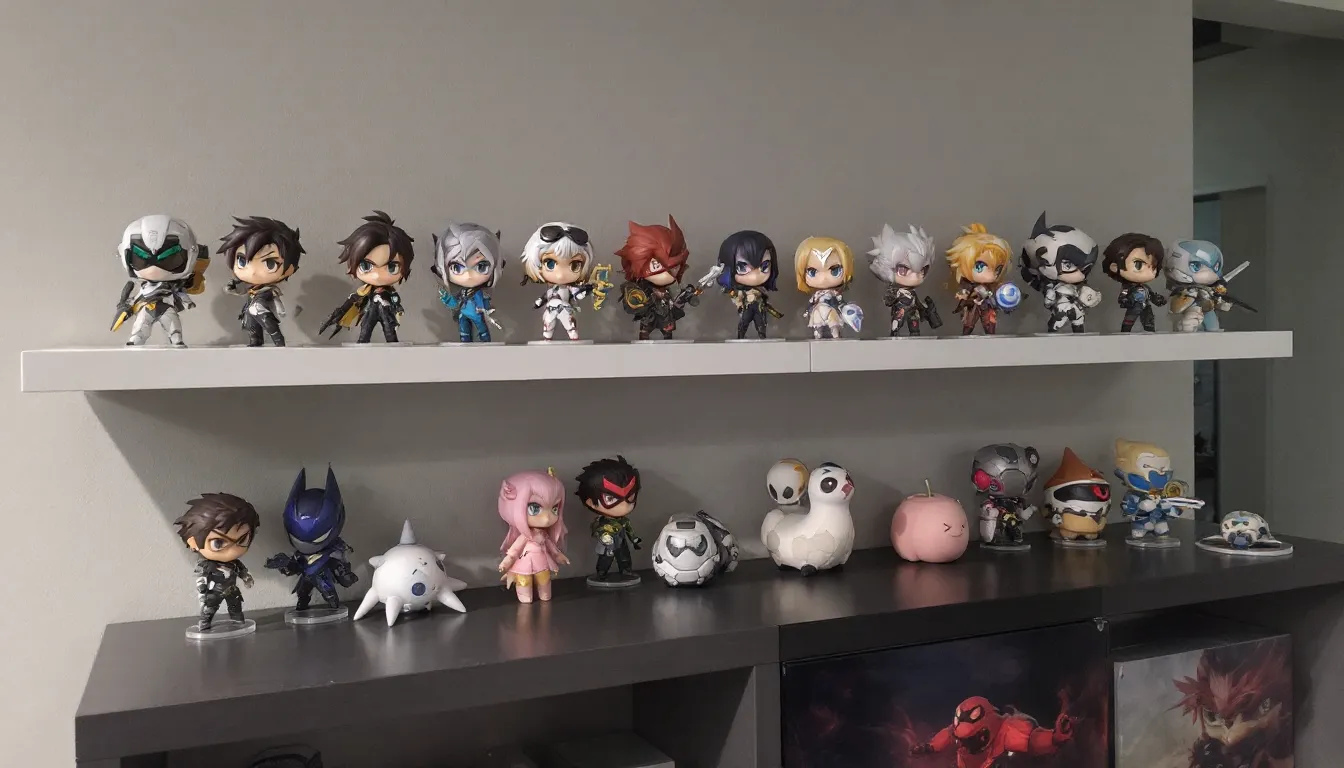
Nendoroids are produced by the Japanese manufacturer Good Smile Company, and they’ve become one of the most recognizable figure lines in the world. What sets them apart is their distinctive aesthetic: oversized heads, chibi-style proportions, and remarkably expressive faces. But don’t let the cute factor fool you, these figures are built to last. Each Nendoroid ships with multiple interchangeable face plates, allowing collectors to display their favorite characters with different expressions and emotions.
The articulation is surprisingly robust for figures at this scale. Ball joints at the neck, shoulders, elbows, hips, and knees give collectors real flexibility in posing options. You can get dynamic action poses or gentle, standing displays. The figure’s body usually comes with a stand, which is essential since the oversized head creates a top-heavy balance. This combination of durability, articulation, and customization options makes Nendoroids ideal for collectors who want figures that are fun to handle, rearrange, and photograph.
Overwatch fans specifically gravitated toward Nendoroids because the chibi art style actually complements the game’s colorful, character-driven aesthetic. Tracer, Mercy, Widowmaker, and other heroes look almost right translated into this proportional style. The figures capture the essence of each character’s personality through their signature gestures, color schemes, and accessories.
Overwatch’s Role in the Nendoroid Universe
Overwatch became one of the first major esports titles to receive a full Nendoroid treatment. Good Smile Company’s partnership with Blizzard started around 2018, and it’s proven to be one of the most successful collaborations the manufacturer has done with a Western IP. This matters because Nendoroids are traditionally dominated by anime and Japanese gaming licenses, making Overwatch’s representation particularly noteworthy.
The success of Overwatch Nendoroids opened doors for other competitive shooters and Western franchises to get similar figure lines. It demonstrated that there was genuine collector demand for articulated, customizable figures based on modern multiplayer games. When collectors hunt for Overwatch Nendoroids today, they’re often part of a broader hobby that includes collecting figures from League of Legends, Valorant, and other esports-focused titles.
Blizzard’s commitment to the Nendoroid line has been consistent even as the Overwatch franchise itself evolved from the first game into Overwatch 2. New releases have continued, though the pace depends on character popularity, sales performance, and Good Smile Company’s production capacity. For fans, this continuity is reassuring, it means the character you want might still get a figure eventually.
Complete Lineup of Overwatch Nendoroids Available
Hero-by-Hero Breakdown of Released Figures
As of early 2026, Good Smile Company has released roughly 25+ Overwatch Nendoroids spanning both the original game and Overwatch 2. The roster includes most of the game’s most iconic heroes, though availability varies significantly depending on region and market.
Tank Heroes:
- Reinhardt – Released with his signature hammer and shield, featuring an armored-up aesthetic that translates surprisingly well to chibi proportions.
- D.Va – Multiple variants exist, including standard pilot and mecha versions. The mecha suit adds extra size and detail, making it a centerpiece figure.
- Winston – The giant gorilla surprisingly works in Nendoroid form, though it’s one of the larger entries in the line.
- Roadhog – His bulky frame and hook are iconic, and the figure captures both aspects faithfully.
Damage Heroes:
- Tracer – One of the earliest Overwatch Nendoroids released, featuring her signature pistols and dual face plates for different expressions.
- Widowmaker – Her sleek design translates beautifully into the Nendoroid style. Several variants exist with different color schemes and accessories.
- Genji – His samurai aesthetic makes for visually striking figure. Multiple face plates show different emotional states.
- McCree (Cole Cassidy) – The cowboy character’s redesigned name saw a subsequent figure release reflecting the updated character identity.
- Reaper – His darker aesthetic stands out among the lineup, featuring detailed armor and dual shotguns.
- Mercy – One of the most popular Nendoroids in the line, with multiple face plates and wing accessories.
- Hanzo – His bow and quiver make for dynamic posing, and his face plates capture his stoic demeanor.
- Symmetra – Her architectural-themed design includes her Photon Projector and segmented bun hairstyle.
- Bastion – The omnic hero’s figure includes Ganymede, the bird companion, as a separate accessory.
Support Heroes:
- Lúcio – His high-energy personality shines through multiple face plates and his roller skates are fully articulated.
- Zenyatta – The omnic monk’s spherical design actually works well in Nendoroid form, with his orbs as accessories.
- Ana – The sniper support’s figure includes her scoped rifle and one of the most detailed facial sculpts in the line.
- Brigitte – Her armored, melee-focused design includes her flail weapon and shield generator.
Defensive Heroes:
- Junkrat – His chaotic energy and explosive personality are captured through multiple expressions and his RIP-Tire as an accessory.
- Pharah – Her winged, rocket-powered design is visually impressive as a figure, with flight-capable posing options via the stand.
- Soldier: 76 – The gruff military character’s figure is straightforward but captures his tactical aesthetic.
- Torbjörn – One of the few support/defense hybrids, his compact frame works perfectly for Nendoroid’s proportions.
Not every hero has received a Nendoroid yet, and the list of who’s missing changes as new releases are announced. Popular heroes who still lack figures include Orisa, Baptiste, Junker Queen, and several of the newer Overwatch 2-exclusive characters.
Exclusive Variants and Limited Editions
One of the more frustrating aspects of collecting Overwatch Nendoroids is the prevalence of exclusive variants. Good Smile Company regularly produces limited-edition versions exclusive to specific retailers or regions, which drives up secondary market prices for completionists.
Regional Exclusives:
- Japanese retailers like Good Smile Company’s official store often get exclusive face plates or color variants not available elsewhere.
- North American exclusives are typically released through retailers like Play-Asia or Amazon US, sometimes with slightly different packaging.
- European releases occasionally feature region-specific variants, though these are less common than US or JP exclusives.
Retailer Exclusives:
- Anime Expo editions and convention exclusives are produced in limited quantities. These often feature unique packaging or bonus accessories.
- Target, Amazon, and other major retailers sometimes secured exclusive variants with different face plates or base designs.
- Japanese convenience stores like Lawson or Animate occasionally released mini-figure bundles or exclusive variants.
Special Editions:
Season pass holders for Overwatch occasionally received promotional Nendoroid accessories or special edition boxes. These have become highly sought-after and command premium prices on the secondary market.
The challenge for collectors is that many of these exclusives are years old now, making them difficult to track down at reasonable prices. A variant that retailed for $60 in 2019 might cost $150+ on eBay or other resale platforms.
Upcoming Releases and Announcement Forecasts
As of March 2026, Good Smile Company hasn’t announced major Overwatch Nendoroid releases in the immediate future, though this could change. Blizzard typically announces new merch through their official channels and social media, often aligned with seasonal updates or esports events.
Characters most likely to receive figures in coming years based on popularity metrics and missing roster gaps include Kiriko, Lúcio (who finally got a figure after years of demand), and several Overwatch 2 exclusive heroes. But, this is educated speculation rather than confirmed information, official announcements from Good Smile Company or Blizzard remain the only reliable source.
The secondary market often inflates prices for heroes when announcement rumors circulate. If news breaks that a popular hero is getting a Nendoroid, pre-orders for the figure can sell out within hours, and existing figures of that character see immediate price increases. Following Japanese gaming news sites like Gematsu is the best way to catch announcements before they spread widely across Western gaming communities.
How to Collect and Display Your Overwatch Nendoroids
Finding Authentic Figures and Avoiding Counterfeits
Counterfeit Nendoroids are unfortunately common, especially on third-party marketplaces. Counterfeiters have gotten shockingly good at replicating the packaging and figure quality, making it harder for casual buyers to spot fakes. Here’s how to protect yourself:
Purchase from Authorized Retailers:
- Good Smile Company’s official store (goodsmilecompany.com) is the safest option, though international shipping is pricey.
- Authorized retailers include Play-Asia, Amazon (verified sellers), HobbyLink Japan, AmiAmi, and Nippon-Yasan.
- Avoid eBay sellers with no history or suspiciously low prices. A Nendoroid selling for 30% below market rate is almost certainly counterfeit.
Red Flags for Counterfeits:
- Blurry or low-quality photos in listings. Counterfeiters often steal images from legitimate retailers.
- Typos or poor grammar in product descriptions. Many counterfeit sellers source from non-English speaking markets.
- Packages arriving from unexpected countries. If you ordered from a US retailer but it shipped from China, that’s a huge red flag.
- Cheap materials on inspection. Authentic Nendoroids have smooth, high-quality plastic. Counterfeits feel waxy or plasticky by comparison.
- Face paint that smudges or looks uneven. Authentic figures have crisp, clean paint application on the face plates.
- Loose joints or parts that don’t fit properly. Quality control on authentic figures is rigorous.
Verification After Purchase:
When your figure arrives, inspect the packaging carefully. Authentic boxes have specific fonts, precise color matching, and high-quality printing. The figure itself should feel solid, with smooth joints and clean paint applications. If something feels off, contact the retailer immediately.
Pricing, Rarity, and Secondary Market Trends
Nendoroid prices fluctuate significantly based on availability and demand. A newly released figure typically retails for $50–$65 USD. Once production ends, prices on the secondary market can climb dramatically.
Current Price Ranges (2026):
- Recently Released Figures: $50–$70 MSRP. Available through most major retailers without markup.
- Out-of-Print Figures (1–3 years old): $80–$150. Still findable, but supply is limited. Demand is high, especially for popular heroes.
- Rare/Discontinued Figures (4+ years old): $150–$400+. Early releases like original Tracer and Mercy Nendoroids command premium prices. Exclusive variants can exceed $500.
- Exclusive Variants: Typically cost 20–50% more than standard versions if they’re the same age. Older exclusives can be 2–3x more expensive.
Secondary Market Dynamics:
The Overwatch Nendoroid secondary market is driven by collector demand, figure rarity, and character popularity. Prices spike when:
- A character receives a buff in Overwatch/Overwatch 2, making them meta-relevant again.
- A new figure is announced, causing collectors to hunt for older variants of the same hero.
- Esports moments create character hype (a hero’s pick rate spikes in pro play, driving interest).
Places to find figures on the secondary market include eBay, MercariJP, Yahoo Auctions (Japan), and dedicated collector forums. Japanese markets typically have lower prices than Western resellers, but shipping costs and international fees can negate savings. Patience is key, prices fluctuate, and setting up alerts on auction sites helps catch deals.
Display and Storage Best Practices
Nendoroids are durable figures, but they deserve proper care to maintain their condition and appearance.
Display Setup:
- Use the included stand whenever possible. The oversized head creates weight distribution challenges, and the stand prevents toppling.
- Keep figures away from direct sunlight. Prolonged UV exposure causes paint fading and plastic discoloration over time.
- Maintain temperature stability. Extreme heat or cold can warp plastic joints, especially on older figures.
- Avoid humid environments. High humidity can cause paint peeling and encourage dust accumulation.
Handling and Posing:
- Gently articulate joints rather than forcing them. Nendoroid joints are designed for movement but can break with excessive force.
- When swapping face plates, support the head while changing them. Pulling directly on the plate can strain the neck joint.
- Avoid extended poses that stress a single joint. Rotate poses every few months to distribute wear.
- Store extra face plates in their original packaging to prevent warping or scratching.
Dusting and Maintenance:
- Use a soft, dry cloth for gentle dusting. Avoid compressed air, which can force dust into joints.
- For stubborn dust, a soft-bristled brush (like a toothbrush) works well on detailed areas.
- Never use liquids or solvents on the figure itself. If a face plate gets dirty, gently wipe with a barely-damp cloth and allow to air dry completely.
Storage:
If you need to pack figures away, use acid-free tissue paper and store in a cool, dry location. Original boxes are ideal for long-term storage because they provide protection and maintain resale value. Avoid plastic bags directly touching the figure, as they can trap moisture.
Customization and Community Culture
Popular Mods and DIY Enhancement Ideas
One of the most vibrant aspects of the Nendoroid community is customization. Because Nendoroids ship with interchangeable parts and are highly articulated, they’re perfect canvases for modification.
Common Customization Projects:
Face Plate Modding:
- Custom paint jobs on face plates are the most popular mod. Collectors repaint expressions, add details like tears or scars, or create entirely new expressions based on in-game cosmetics.
- Creating custom decals using waterslide decal paper allows collectors to add Overwatch ability icons, team logos, or custom art to face plates.
- Some collectors commission professional painters to create hyper-detailed custom plates, though these can cost $50–$150+ per plate.
Body Modifications:
- Repainting the body to match alternate color schemes or cosmetics from Overwatch (like Tracer’s Ultraviolet or Mercy’s Businesswoman skin).
- Swapping parts between figures to create mashup characters or different pose options.
- Adding custom bases with themed decorations, some collectors create dioramas with multiple figures and environmental details.
Accessory Creation:
- 3D-printing custom accessories that weren’t included with the original figure. Popular additions include weapons, ability orbs, or environmental pieces.
- Crafting fabric accessories like cloaks, wings, or clothing modifications using felt or other materials.
- Magnetizing figures to create custom display rigs or interaction scenes.
Complexity Levels:
Simple mods (basic repainting, decals) are achievable for anyone with basic craft supplies. Advanced customization (sculpting new parts, hyper-detailed painting) requires experience and specialized tools. The community has tutorials spread across YouTube, Discord servers, and Reddit that range from beginner-friendly to advanced techniques.
Fan Community, Trading, and Online Resources
The Overwatch Nendoroid collecting community is active and welcoming. Multiple platforms host discussions, trades, and shared inspiration.
Major Community Hubs:
- Reddit: r/Nendoroid and r/Overwatch have active collector discussions. The subreddit regularly features collection photos, purchase hauls, and customization showcase posts.
- Discord Servers: Dedicated Nendoroid and Overwatch collector servers exist where members share photos, discuss new releases, and organize trades. These communities are often more active and real-time than forum-based alternatives.
- Twitter/X: Collectors frequently use hashtags like #Nendoroid, #Overwatch, and #Nendocollector to share photos and connect with other enthusiasts.
- Instagram: Visual-focused platform where collecting accounts showcase display setups, custom mods, and photography. Following collector accounts provides inspiration and keeps you updated on new releases and market trends.
Trading and Buying/Selling:
Community members regularly help trades of duplicate figures or figures they no longer want. Trading is usually done through:
- Community Discord servers with verified trading channels
- Facebook groups dedicated to Nendoroid collecting
- Specialized trading forums where collectors post wants/have lists
- Regional collector meetups (common in areas with large anime/gaming communities)
Trading within the community is safer than random marketplace purchases because you’re dealing with verified collectors who have reputation to maintain. Many Discord servers have mod-verified trader badges to identify trustworthy members.
Resources for Collectors:
- Price tracking databases: Some collectors maintain spreadsheets of historical pricing data for specific figures, helping newer collectors understand fair market value.
- Release calendars: Community members maintain updated lists of confirmed and rumored upcoming releases.
- Regional availability guides: Collated information about where specific variants are available in different countries.
- Photography tips: Tutorials on how to photograph Nendoroids effectively, from lighting setups to posing tricks.
Gaming news outlets like NME Gaming occasionally cover major Nendoroid releases or collecting trends, providing validation that the hobby has grown beyond niche status.
Comparing Overwatch Nendoroids to Other Collectible Figure Lines
Nendoroids vs. Figmas, Pop Vinyls, and Scale Figures
Nendoroids aren’t the only option for Overwatch collectors. Several other figure lines cater to different preferences and budgets. Understanding the differences helps you decide which figures fit your collection best.
Nendoroids vs. Figmas:
Figmas are also produced by Good Smile Company but target a different collector segment. While Nendoroids emphasize cute, chibi proportions, Figmas are highly detailed, anatomically proportional action figures.
- Proportions: Nendoroids are chibi-style: Figmas are realistic in scale and build.
- Articulation: Figmas have more joints and can achieve more complex poses. Nendoroids are less articulated but more stable.
- Price: Nendoroids retail for $50–$65: Figmas typically cost $80–$120.
- Durability: Figmas have more moving parts, making them slightly more fragile. Nendoroids are built tough.
- Aesthetic Appeal: This is purely preference. Nendoroids feel playful: Figmas feel serious and detailed.
Overwatch doesn’t have an extensive Figma line, making Nendoroids the primary articulated figure option for the franchise. A few characters have received Figma releases, but the Nendoroid selection is much broader.
Nendoroids vs. Funko Pop Vinyls:
Funko Pops are arguably the most mainstream collectible figure line globally. They’re affordable and ubiquitous, but they’re fundamentally different from Nendoroids.
- Articulation: Pops have zero articulation. They’re static display pieces.
- Price: Pops retail for $12–$15, making them entry-level collectibles. Standard Pops are 1/10th the price of Nendoroids.
- Character Variety: Pops have broader licensed character coverage, but Overwatch Pop availability is limited compared to Nendoroid options.
- Display Space: Pops are compact and stackable, ideal for shelf space efficiency. Nendoroids take up more room due to their stands and articulation needs.
- Collectibility: Pops are easier to collect (cheaper, widely available) but less engaging to interact with. Nendoroids reward hands-on engagement.
For Overwatch collectors, Pops are a budget-friendly supplement to a Nendoroid collection, not a replacement. Many collectors own both.
Nendoroids vs. Scale Figures (1/8, 1/6, 1/4):
Scale figures are highly detailed, statues-style collectibles that often cost $100–$300+. They’re produced by companies like Max Factory, Alter, and Good Smile Company’s Scale Figure division.
- Detail Level: Scale figures have exceptional paint quality and sculpting. They’re art pieces rather than toys.
- Articulation: Typically zero. Scale figures are for display only.
- Price: Significantly higher than Nendoroids, ranging from $150–$500+ depending on size and detail.
- Display Requirements: Scale figures require careful, stable shelving and dedicated space. They’re not travel-friendly.
- Production: Scale figures are typically produced in smaller batches, making them rarer and more investment-like.
Scale figures appeal to collectors who prioritize aesthetics and are willing to pay for museum-quality display pieces. Nendoroids are for collectors who want interaction, posability, and reasonable affordability.
Value Proposition for the Serious Collector
From a pure collecting standpoint, Overwatch Nendoroids offer excellent value compared to alternative lines.
Advantages:
- Character Coverage: Overwatch has the broadest Nendoroid representation of any Western IP in the figure space. If you want figures of multiple characters, Nendoroids give you the most options.
- Secondary Market: As a mature line with years of releases, the Nendoroid secondary market is stable and transparent. Prices are predictable, and reselling is relatively easy.
- Playability: The ability to pose, swap faces, and customize keeps Nendoroids engaging. You’re not just displaying: you’re interacting.
- Value Retention: While Pops depreciate once released, Nendoroids often hold or increase value, especially out-of-print figures. Mint condition older Nendoroids can appreciate 30–50% over their original retail price.
- Investment Potential: Rare, limited-edition Overwatch Nendoroids have proven to be legitimate collectibles that maintain or grow in value. This makes them slightly more investment-like than average toys.
Disadvantages:
- Upfront Cost: Entry point is higher than Pops. $50+ per figure adds up quickly for a full collection.
- Spoilage Risk: Counterfeits exist, and buying used figures carries risk of paint damage, loose joints, or missing parts.
- Production Delays: New releases sometimes face supply chain issues, creating frustration for collectors anticipating announcements.
- Incomplete Coverage: Not every hero has a figure, so completionists will always have gaps.
For serious collectors, Nendoroids are the sweet spot between affordability, playability, and investment value. They’re more engaging than static Pops, more affordable than scale figures, and more character-diverse than Figmas in the Overwatch space. The community is large, the secondary market is active, and new releases continue to expand the lineup. Siliconera has covered major Nendoroid announcements, indicating mainstream recognition of the line’s collector significance.
Conclusion
Overwatch Nendoroids have carved out a unique space in gaming collectibles. They bridge the gap between affordable, accessible figures and serious collectibles with genuine investment potential. Whether you’re a casual collector grabbing a favorite hero or a dedicated completionist hunting down rare variants, the ecosystem supports both.
The lineup continues to grow, the community remains engaged and welcoming, and the secondary market provides stability for long-term collectors. Start with characters you genuinely love rather than chasing completeness, the financial commitment grows fast, and the most rewarding collections are built around passion, not obligation.
If you’re just entering the hobby, stick to authorized retailers, research prices before buying, and don’t rush into expensive secondary market purchases. If you’re already deep in the collecting game, customization and community engagement add layers of value beyond the figures themselves. Either way, Overwatch Nendoroids offer a compelling blend of quality, character variety, and collectible appeal that justifies their place on any gamer’s shelf.