Table of Contents
ToggleCollaboration skins are the crown jewels of Overwatch cosmetics. These limited-edition hero outfits tap into franchises players actually care about, from Hollywood blockbusters to esports legends, and transform beloved characters into something unexpected and collectible. Whether it’s a Widowmaker skin inspired by a major movie release or an exclusive esports-branded outfit, collab skins generate genuine buzz in a way standard cosmetics rarely do. Players remember where they were when a major collaboration dropped: they remember the grind to unlock it or the decision to spend credits before it vanished. This guide breaks down everything you need to know about Overwatch collaboration skins: what they are, how to get them, which ones actually matter, and how to stay ahead of future releases. If you’re serious about your cosmetic collection or just curious about what makes these skins special, you’re in the right place.
Key Takeaways
- Overwatch collab skins are limited-edition cosmetics created through partnerships with external brands, entertainment franchises, and esports organizations, generating genuine buzz and driving player engagement during specific event windows.
- Licensing agreements determine availability and exclusivity of collaboration skins; once a licensing period ends, skins rotate out of the store and may never return, creating scarcity that drives urgency and collector value.
- Collab skins can be acquired through multiple pathways including direct cosmetic store purchases (typically 1900 OW Coins), event challenges, battle pass rewards, and promotional bundles tied to partnerships.
- Set a monthly cosmetic budget, prioritize skins for heroes you main, anticipate renewal windows, and track official announcements and datamined information to collect collab skins strategically without FOMO-driven overspending.
- Blizzard’s shift to free-to-play has enabled more diverse partnership opportunities, with future collab skins expected to include regional partnerships, tech integrations, and more frequent releases tied to major entertainment events and esports championships.
What Are Overwatch Collaboration Skins?
Overwatch collaboration skins are hero cosmetics created through partnerships between Blizzard and external brands, franchises, or organizations. Unlike standard cosmetics designed purely by Blizzard’s art team, collab skins leverage intellectual property from entertainment franchises, esports teams, music artists, or cultural institutions. The result is a skin that feels like it belongs to two universes at once, a character from Overwatch reimagined through the lens of another brand.
These skins are fundamentally about novelty and exclusivity. They’re available for limited windows, often tied to specific events, licensing agreements, or seasonal windows. A collab skin might reference a movie’s release, celebrate an esports championship, or commemorate a partnership anniversary. The appeal goes beyond aesthetics: players collect them as proof they were there when the collaboration happened, similar to how limited-edition merchandise works in the real world.
Blizzard uses collab skins strategically. They’re event anchors, the reason players log in during a specific two-week window. They generate social media conversation, drive cosmetic sales, and remind players that Overwatch isn’t just a game, it’s part of a larger pop culture ecosystem. A well-executed collab skin can spark conversations across Discord servers, Reddit threads, and esports broadcasts for months after release.
How Collaboration Skins Work in Overwatch
Understanding the mechanics behind collab skins helps explain why certain skins cost more, why they disappear, and why some never come back.
Availability and Licensing
Licensing is the backbone of every collab skin. Blizzard negotiates rights with external partners, studios, production companies, esports organizations, musicians, to use their intellectual property within Overwatch. These agreements have expiration dates and specific terms. Some partnerships are one-time events: others have renewal options.
This is why collab skins aren’t permanent. A skin based on a Marvel film, for instance, is available during a marketing window aligned with the movie’s theatrical or streaming release. Once the licensing period ends, the skin rotates out of the store. Some skins return during reruns of events (like anniversary celebrations), but others genuinely vanish forever if the licensing deal isn’t renewed. Exploring the Impact of Overwatch Cinematics: Storytelling and Character Insights shows how Blizzard builds narrative weight around these partnerships, making them feel like canonical moments rather than cash grabs.
The exclusivity creates scarcity, which drives urgency. Players who miss a collab skin release face months or years of uncertainty about whether it’ll ever return.
Purchase and Acquisition Methods
Collab skins are acquired through several pathways, depending on how Blizzard structures each partnership:
Direct Purchase: Most collab skins are available in the in-game cosmetic store for a set price (usually 1900-2000 Overwatch Coins for legendary rarity). Players can buy them directly with real money or earned premium currency.
Battle Pass Integration: Some collaborations feature collab skins as battle pass rewards, either free track unlocks or premium tier rewards. This bundles the partnership with broader seasonal content and encourages battle pass purchases.
Event Challenges: Limited-time challenge-based unlocks tie collab skins to gameplay achievements. Players complete specific objectives (win 9 games, get 20 eliminations on a specific hero) to unlock the skin for free. This rewards engaged players and spreads gameplay across the event period.
Promotional Bundles: Crossover agreements sometimes bundle collab skins with other cosmetics, sprays, or emotes. A movie partnership might include a movie-themed skin, weapon charm, and highlight intro for a bundled price.
Platform-Specific Deals: Prime Gaming or other service partnerships occasionally feature exclusive collab skins as platform rewards. Prime Gaming Overwatch: Unlock breaks down how service-linked partnerships work and what makes them worth pursuing.
Notable Brand Partnerships and Crossovers
Overwatch has secured partnerships across multiple entertainment verticals. Understanding the scale and scope of these collaborations shows why Blizzard is positioned as a hub for crossover cosmetics.
Entertainment Franchises
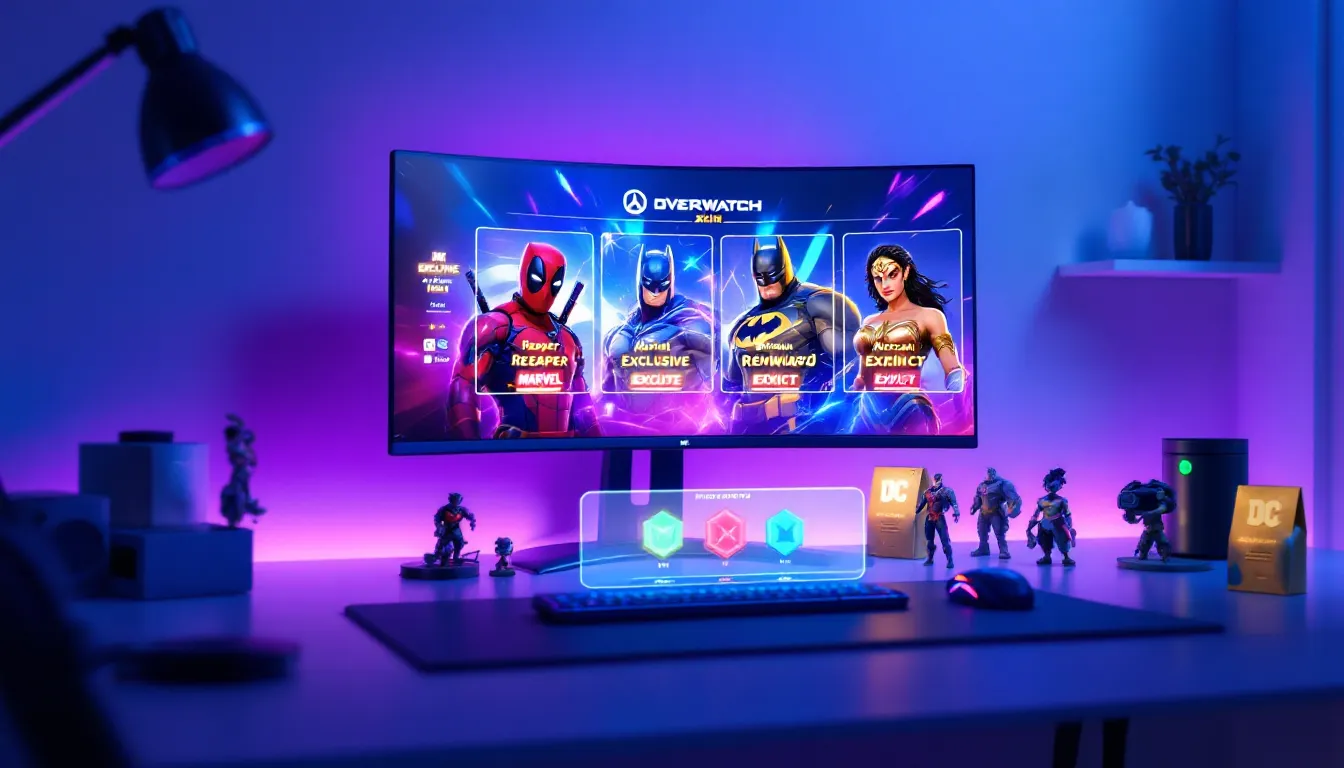
Blizzard has secured major deals with Hollywood studios and streaming platforms. Marvel collaborations brought iconic heroes into the game (think combat-ready skins for characters who fit Overwatch’s aesthetic). DC partnerships similarly positioned popular comic franchises within the hero shooter. Anime and manga licensors have contributed skins that appeal to the anime gaming demographic, a significant cross-section of the Overwatch community.
The entertainment vertical is Blizzard’s most consistent source of major partnerships. Movies and shows generate sustained marketing pushes, synchronized release windows, and franchise fan bases hungry to see their characters reimagined as Overwatch heroes. These partnerships are announced months in advance, building hype across gaming and entertainment media.
Esports and Gaming Partnerships
Overwatch League and its associated teams have launched branded skins featuring team colors, logos, and aesthetics. These skins let players represent their favorite esports organizations in-game, creating a bridge between watching competitive play and participating in casual matches.
Gaming hardware manufacturers (headset companies, peripheral makers) have occasionally partnered with Blizzard for branded cosmetics. These appeal to competitive and hardcore players who recognize the partner brands and value the association. How Many Characters Are highlights how diverse the hero roster is, giving partnerships plenty of canvas to work with, there’s virtually a hero for any brand aesthetic.
Cultural and Music Collaborations
Music festivals and artists have inspired limited-edition cosmetics. K-pop partnerships, in particular, have resonated with Overwatch’s younger, global demographic. These cosmetics blur the line between gaming and music culture, appealing to players who exist in both communities.
Cultural partnerships extend to art institutions, design houses, and regional celebrations. Some skins honor specific cultures or artistic movements, positioning Overwatch as a platform that acknowledges global audiences beyond the Western gaming mainstream. These collaborations are often celebrated by media outlets like IGN for expanding gaming’s cultural conversation.
Most Iconic Overwatch Collaboration Skins
Not all collab skins hit the same. Some become legendary in the community, define a hero’s aesthetic, or spark cultural moments. Others fade into obscurity. Here’s what separates the iconic from the forgettable.
Sought-After Exclusive Releases
Certain collab skins achieve near-mythical status because of their rarity, desirability, or narrative significance. Early collaborations often hold special weight, players who snagged them years ago own pieces of Overwatch history. Skins tied to massive entertainment releases (blockbuster films, cultural phenomena) become sought-after because they’re recognizable even outside the gaming sphere.
The scarcest collab skins are those from partnerships that never renewed. If a licensing deal expires and Blizzard doesn’t negotiate renewal, a collab skin becomes permanently unavailable. Players who missed the window can’t acquire it through any standard means. This creates a secondary market of regret and speculation: “Will it ever come back?” These skins command psychological weight in the community. Seeing a player with an extinct collab skin signals they’ve been around, they were paying attention, and they had the disposable income to grab it.
Players and collectors obsessively track return dates for renewable collab skins, comparing notes on forums and Discord servers. The debate over which collab skin represents the “best” is less about visual design and more about the combination of exclusivity, gameplay fit, and cultural resonance.
Community Favorites and Rarity Tiers
Community favorites aren’t always the rarest, they’re the skins that found perfect aesthetic harmony between the partner brand and the hero. A collab skin succeeds when it enhances a hero’s identity without feeling like a costume or a gimmick. When a partnership respects both the hero and the source material, players embrace it organically.
Rarity tiers emerge naturally in the community. Tier 1 includes skins from era-defining partnerships (early Marvel collabs, championship esports skins) that haven’t returned in years. Tier 2 includes renewable collab skins that return annually but maintain exclusivity windows. Tier 3 includes newer collab skins or those from smaller partnerships that are less scarce but still limited-time.
Interestingly, perception doesn’t always match supply. A skin from a beloved entertainment franchise might feel rarer than it actually is because the community talks about it more. Meanwhile, a legitimately extinct collab skin from a less-hyped partnership might be overlooked. Next Overwatch Event: What to Expect provides tracking for which skins are likely returning, helping players calibrate their understanding of true rarity.
How to Obtain Collaboration Skins
Getting collab skins requires strategy, timing, and awareness. Miss the window, and you might be waiting months or forever.
In-Game Cosmetic Store
The cosmetic store is the primary channel for collab skin purchases. When a partnership launches, the featured skins occupy prominent real estate in the store, the top banner, special tabs, or rotating featured sections. Prices are standardized (usually 1900 OW Coins for legendary rarity), which is equivalent to roughly $19.99 in regional pricing, though actual cost varies by region and currency.
Players accumulate Overwatch Coins through real-money purchases or occasional game rewards. There’s no free way to earn significant coin reserves, so planning coin spending is part of collector strategy. Some players budget a fixed amount per month for cosmetics: others save coins across seasons to fund major releases.
The store rotates cosmetics daily, so even during an event, specific skins might be out of immediate view. If a player wants a specific collab skin, they need to either wait for it to cycle back or check the store regularly. Some skins are guaranteed availability throughout their event window: others appear less frequently. Reading patch notes or following community trackers (available on sites like Video Games Chronicle) clarifies the exact rotation schedule.
Event-Based Acquisition
During limited-time events, collab skins are tied to gameplay. Blizzard deploys challenge systems that require players to complete specific objectives to unlock cosmetics for free. This incentivizes engagement beyond cosmetic purchases.
Event challenges vary in difficulty and time investment. Casual challenges (“Play 3 games”) reward free skins relatively easily. Harder challenges (“Get 20 eliminations on Hero X in 10 games”) filter for more committed players. Most event cosmetics are designed to be achievable within the event window for players averaging 1-2 hours per day, though some skins are gated behind premium content or harder tiers.
The challenge structure is Blizzard’s way of rewarding play-time alongside cosmetic purchases. It funds cosmetics through gameplay rather than just wallets, though cosmetics purchased directly are available regardless of challenge completion.
Battle Pass Exclusives
Battle passes bundle seasonal content into a tiered progression system. Premium battle pass tiers (purchased separately) include exclusive cosmetics, sometimes featuring collab skins. Free battle pass tracks offer cosmetics to non-paying players, but the most desirable collab skins are typically premium rewards.
Battle pass cosmetics are guaranteed: if you buy the pass and reach the required tier, you get the skin. There’s no RNG or challenge requirement. This certainty appeals to completionists and players who prefer direct purchases over grinding.
Battle pass seasons typically last 6-9 weeks. If a collab skin is bundled as a tier 80 reward (out of 80 tiers), players need to grind or buy tier skips to reach it. This incentivizes continued seasonal engagement and monetization beyond cosmetics alone. Understanding which collab skins fall into battle pass exclusives versus store releases shapes collection strategy. Overwatch Collab: Unleashing Epic Crossovers and Exciting New Skins breaks down the current season’s cosmetic structure and which skins are available through which channels.
Tips for Collectors and Completionists
Serious cosmetic collectors treat skins like an investment in gaming identity. Strategy separates players with curated collections from those with buyer’s remorse.
Budget and Spending Strategies
Set a monthly cosmetic budget and stick to it. Cosmetics provide zero competitive advantage, so spending should feel optional and guilt-free. A typical budget might be $10-$30 monthly, equivalent to 1-2 collab skins per month or flexibility to save for major releases.
Prioritize based on hero main status. If you main Widowmaker, prioritize Overwatch Widowmaker Skins: A Deep Jump into Style and Impact to understand which legendary skins genuinely improve your perception of the character. Don’t buy collab skins for heroes you never play, skins look different on heroes you actively use versus heroes you occasionally flex.
Anticipate renewal windows. If a collab skin returns annually (like esports team skins during OWL season), budget for it during that specific window rather than impulse-buying during unexpected reruns. This prevents over-spending and lets you plan cosmetics around confirmed releases.
Cash your coins wisely. Don’t spread coins across multiple 1200-coin cosmetics when waiting for a 1900-coin legendary you actually want. Track upcoming collab releases and preserve coin reserves for confirmed announcements. Early season patches often leak future cosmetics through datamining, giving collectors advanced notice.
Tracking Release Calendars
Keep an active tracker of collab skin release windows. Blizzard announces partnerships weeks or months in advance through official channels (patch notes, social media, developer updates). Subscribe to official Overwatch social accounts and follow community news outlets to catch announcements.
Dataminers on Reddit and fan wikis often uncover unreleased cosmetics months before official announcements. This isn’t guaranteed information, but it provides signal about what’s coming. Use datamined info to adjust budgets and expectations without treating it as confirmed.
Create a personal spreadsheet or notes doc tracking which collab skins you own, when they last returned (if applicable), and your priority level for acquiring missing skins. This prevents duplicate purchases and clarifies collection gaps. Distinguish between skins you need and skins you want: scarcity shouldn’t drive purchases of skins that don’t align with your heroes or aesthetic preferences.
Join community collector Discord servers or forums. Experienced collectors track historical release dates, licensing renewal patterns, and probability of reruns based on past behavior. Game Informer also covers major Overwatch cosmetic releases in their gaming features, providing mainstream media validation and additional context around significant partnerships.
Future Collaboration Predictions
Overwatch 2’s shift to free-to-play opened doors for broader partnership opportunities. The game is now a platform for cross-promotional cosmetics, not just a premium product. This expansion means more collab skins, more diverse partners, and more frequent release windows.
Blizzard has historically partnered with major entertainment studios (Marvel, DC, anime properties), esports organizations (OWL teams, esports organizations), and increasingly, lifestyle and cultural brands. The trend points toward even more frequent collaborations. Where players once received one major collab skin per season, they’re now seeing multiple partnerships per season.
Expect renewed focus on regional partnerships. Markets like Korea and China represent significant player populations with distinct brand preferences. Blizzard will likely pursue partnerships with K-pop groups, local esports organizations, and regional entertainment franchises to maintain localized appeal.
Tech partnerships may expand. Gaming hardware manufacturers, streaming platforms, and subscription services represent untapped territory for cosmetic bundles. Imagine Twitch Prime (or successor programs), Discord Nitro, or GeForce Now partnerships featuring exclusive Overwatch cosmetics. These partnerships appeal to players already within those ecosystems, creating cross-promotional synergy.
The meta will shift around partnership timing. Major movie releases, music festivals, esports championships, and gaming conferences will drive cosmetic release calendars. Players who track these external events will better predict which partnerships are coming and plan cosmetic budgets accordingly.
As partnerships become more common, rarity perception will adjust. Collab skins won’t feel as precious if every event features one. The community will develop more sophisticated tier systems distinguishing between renewable annual partnerships, one-time limited collaborations, and permanently extinct skins. Collectors will need to evolve strategies, focusing on genuinely rare skins while accepting that newer collab cosmetics are more accessible.
Conclusion
Overwatch collaboration skins represent more than cosmetics, they’re collectible artifacts of the game’s place in broader pop culture. They reward players who stay engaged, celebrate partnerships between gaming and entertainment, and create scarcity that drives value within the community.
Whether you’re a completionist chasing every collab skin or a selective collector who waits for partnerships that genuinely resonate, the key is well-informed choice-making. Track announcements, understand licensing timelines, budget strategically, and remember that cosmetics are optional enhancements to a game you already enjoy. The best collab skin is one that makes you happier to play a hero you love, not one you grabbed out of FOMO.
The collaboration landscape will only expand as Overwatch 2 matures. More partnerships mean more opportunities to find skins that feel uniquely yours, but also more decisions to make about where to spend your cosmetic budget. Use the frameworks in this guide to navigate releases confidently, collect intentionally, and never miss a collab skin that actually matters to you.